Pioneering MVPs for an uncharted crypto-to-FIAT market
UX research and user-workflow design for a merchant pay widget entering the crypto-to-FIAT exchange market — differentiated by removing mandatory customer sign-ups entirely.
Team project — academic / client engagement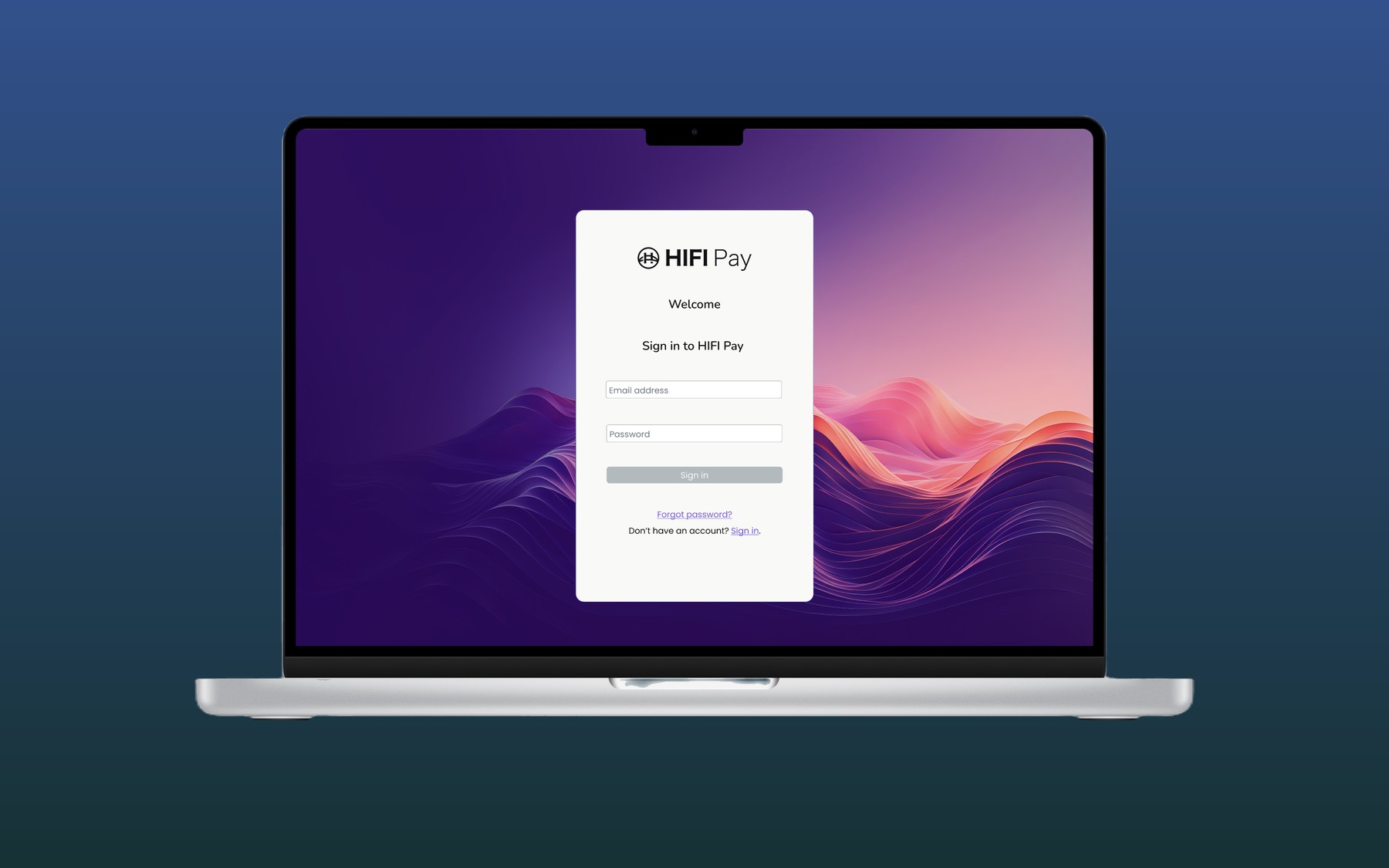
Essential prerequisites in an uncharted market
HiFi Bridge set out to enter the crypto-to-FIAT merchant exchange market with a key differentiator: no mandatory customer sign-up, and seamless purchasing across multiple cryptocurrencies converted into a merchant's preferred currency. That differentiator came with real tension — an unprecedented pay-widget scope that still had to feel seamless, an emerging market with no existing user data or behavior patterns to design from, and stakeholders unfamiliar with user-centered methodology who needed the value of UX explained, not assumed.
- Add users to business portals with limited capability options
- Secure login to the merchant portal
- A customizable pay widget merchants could deploy immediately
Strategically planning for future sprints
The solution centered on a desktop merchant portal paired with a customizable pay widget merchants could embed directly into their own e-commerce checkout. User stories and acceptance criteria were written to guide each development phase, cybersecurity best practices were built in against phishing and hacking, and accessibility improvements with auto-layouts were organized into an Atomic Design Library for the design and dev teams to share going forward.
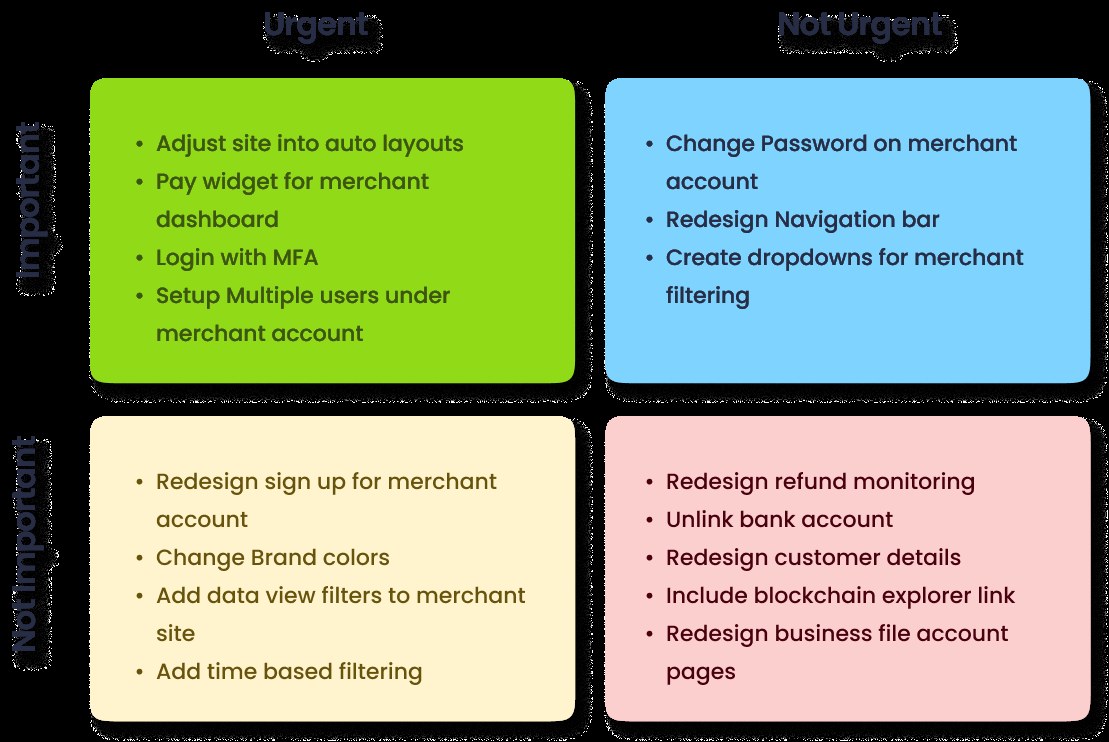
Work was phased using an Eisenhower Matrix to prioritize scope. Sprint One focused narrowly on security and the customer-facing widget, to ship a functional MVP fast — with later features tracked on a Gantt chart rather than pulled forward prematurely.
Borrowing signal from adjacent industries
With no established user base to study, research looked sideways — to comparable luxury and financial industries (automotive, real estate, hospitality) — and out into the crypto community directly: surveys on Reddit and Discord with crypto consumers and investors, plus interviews with CPAs and industry experts. SWOT analyses of two direct competitors, Binance and Bitpay, rounded out the picture.
80% frustrated by forced sign-up
Forum research found the large majority of users frustrated by having to sign up for services like Bitpay or Coinbase just to use a crypto wallet a single time — directly validating HiFi Bridge's no-sign-up differentiator.
Transparency gap
Competitors' pay widgets also lacked full fee and price-breakdown transparency, a trust gap HiFi Bridge could close.
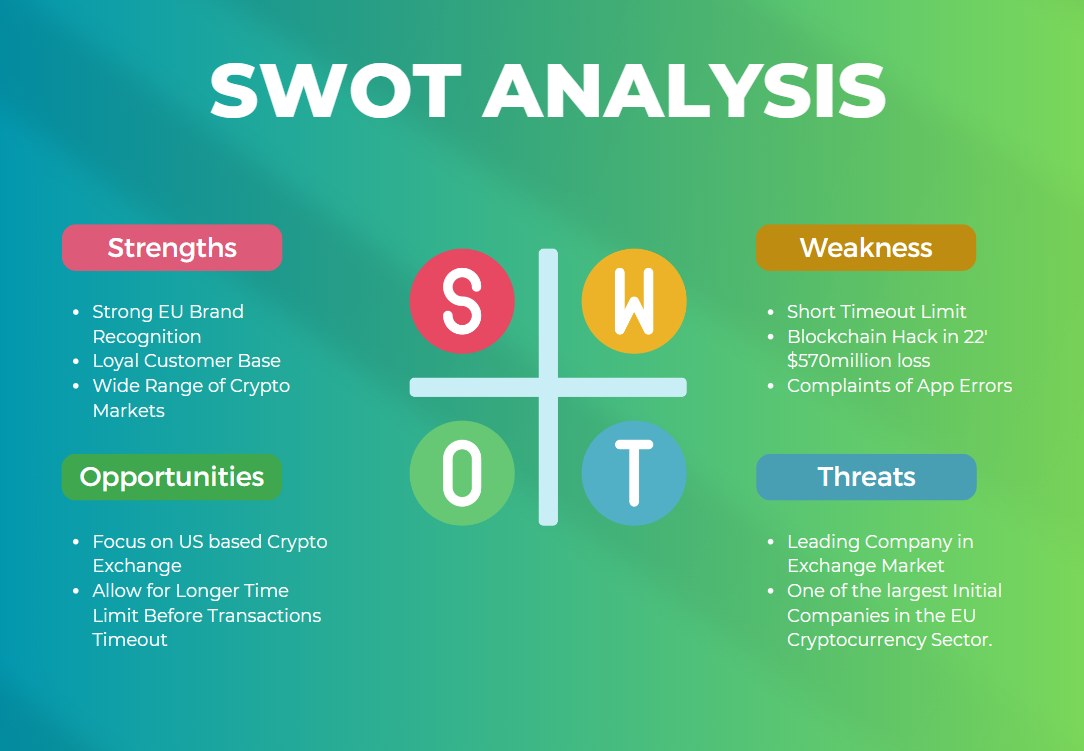
Competitive SWOT — Binance
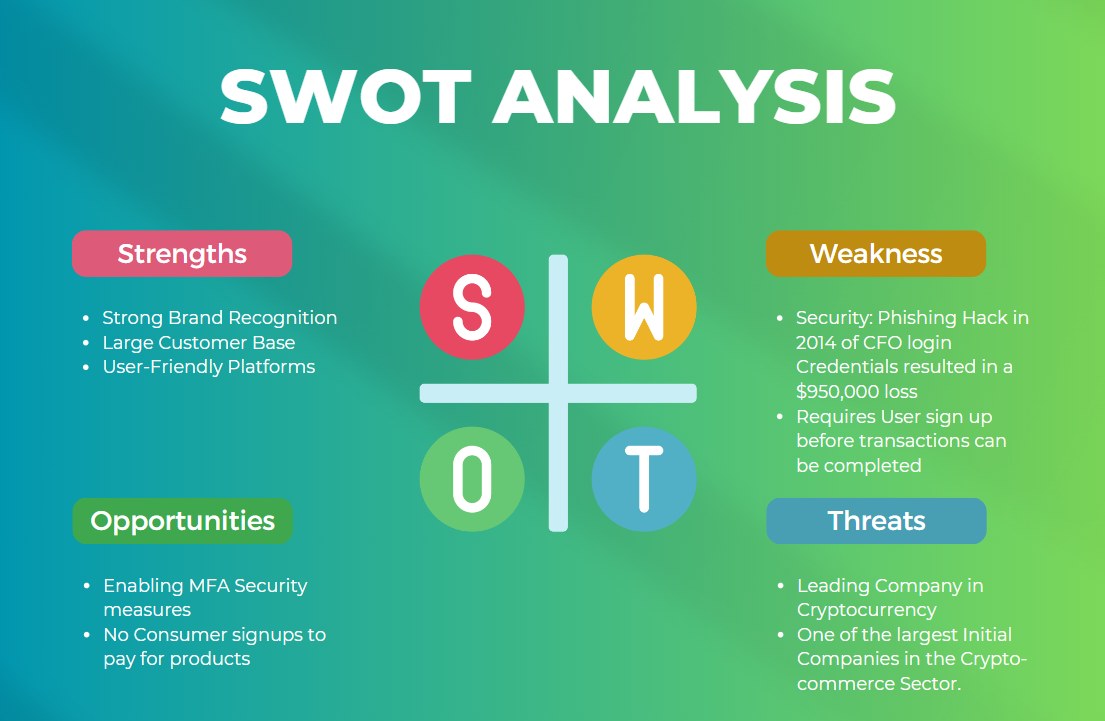
Competitive SWOT — Bitpay
Designing from empathy maps, not analytics
Three proto-personas — built from the survey and interview research above — anchored navigation decisions and wireframes, and were later reused directly in investor presentations.
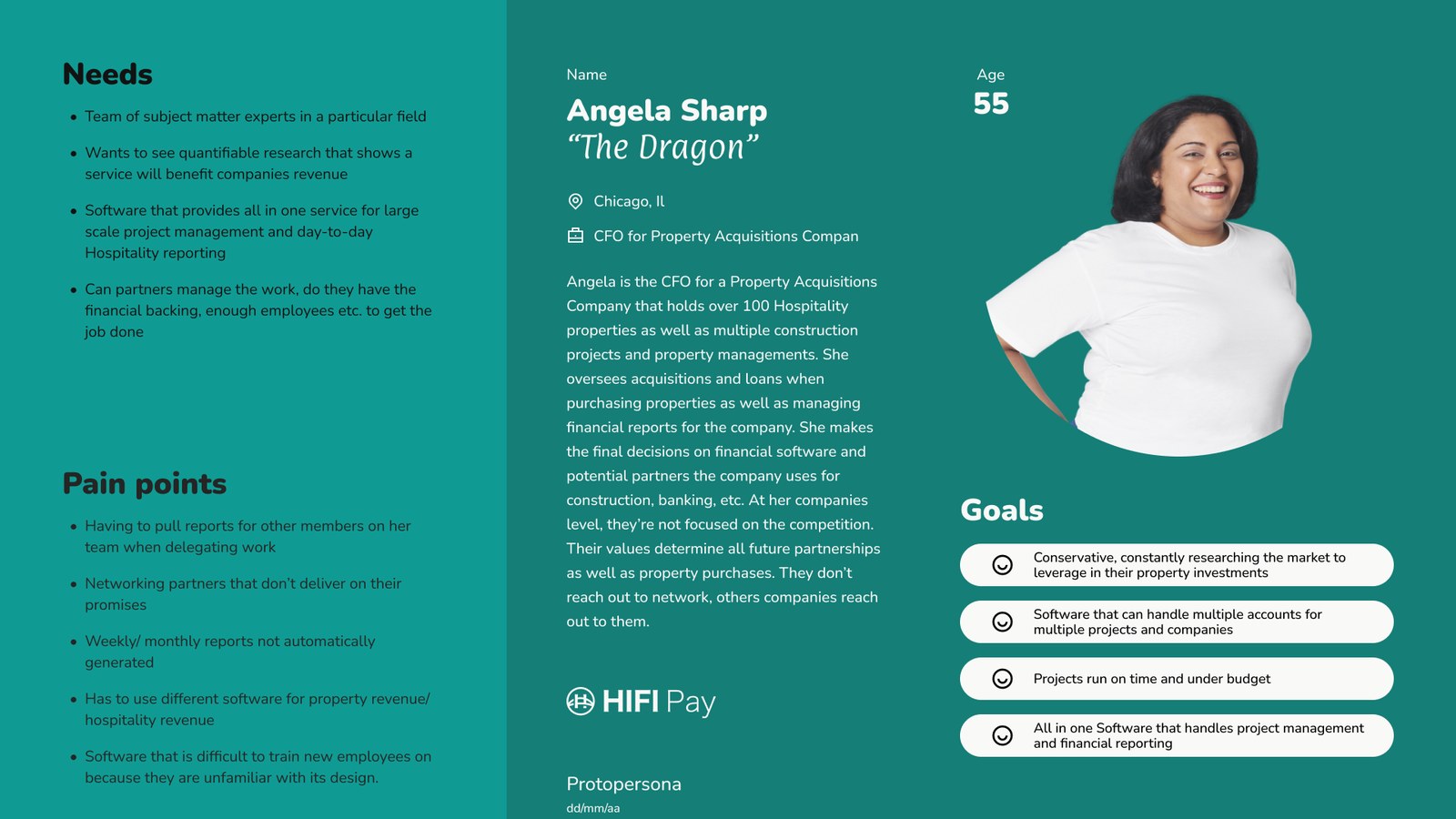
Angela Sharp, "The Dragon" — CFO, Property Acquisitions Co.
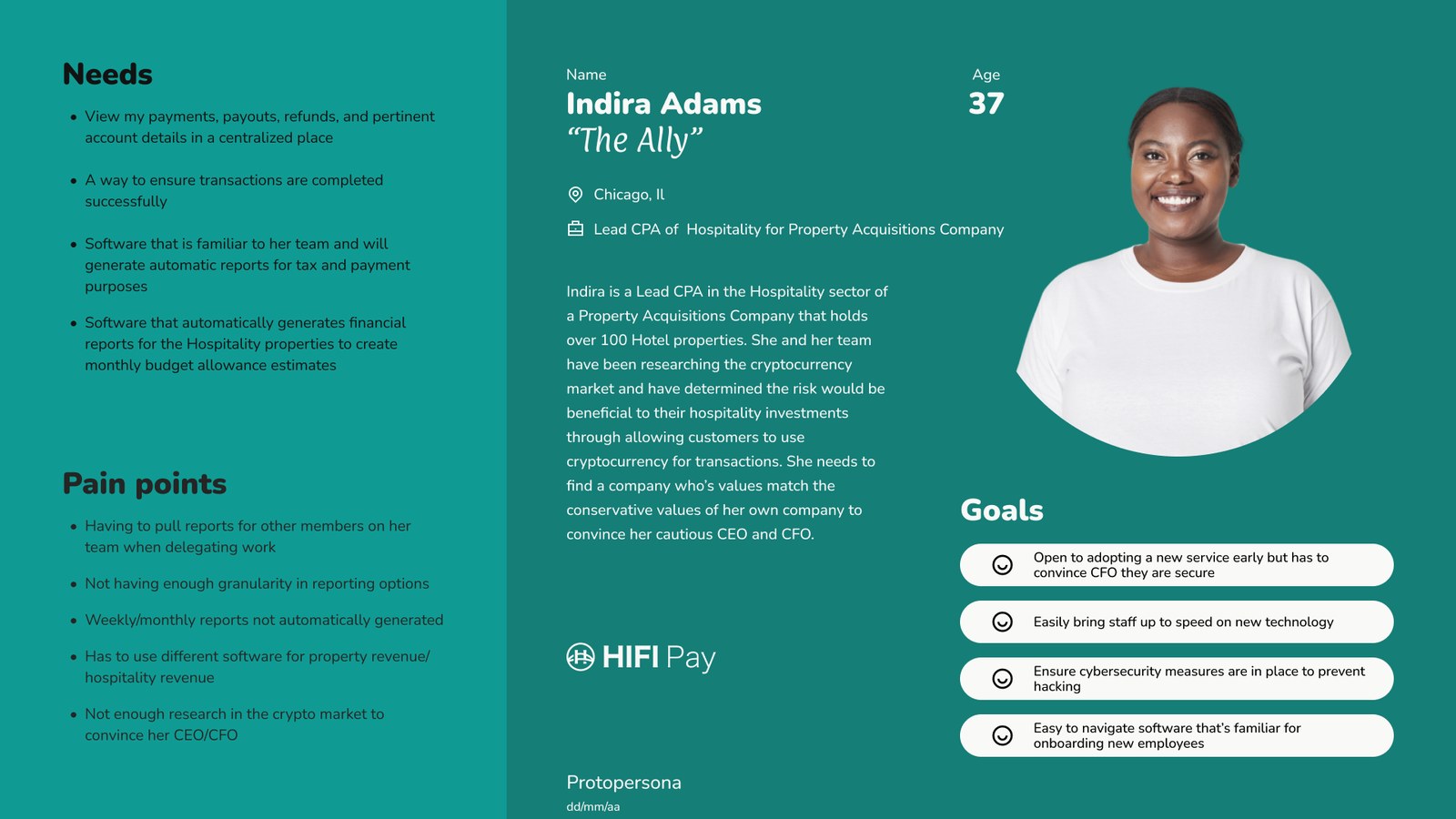
Indira Adams, "The Ally" — Lead CPA, Hospitality
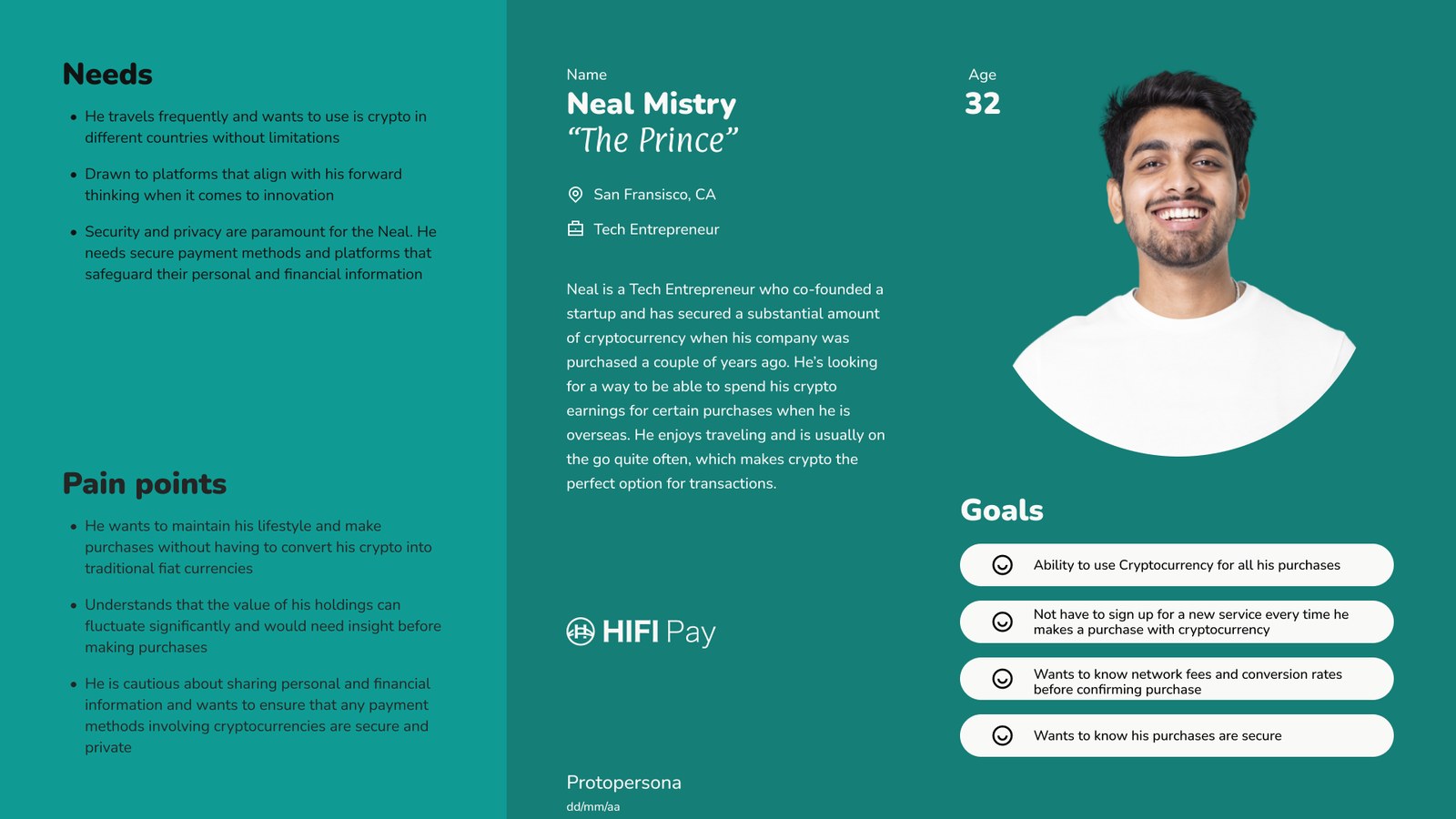
Neal Mistry, "The Prince" — Tech Entrepreneur
Two surfaces, one consistent system
The merchant-facing dashboard gives business owners a clear read on revenue, payments, and payouts at a glance, while the embeddable pay widget lets a customer set an amount, connect a wallet, and check out in a few taps — all within a merchant's own site.
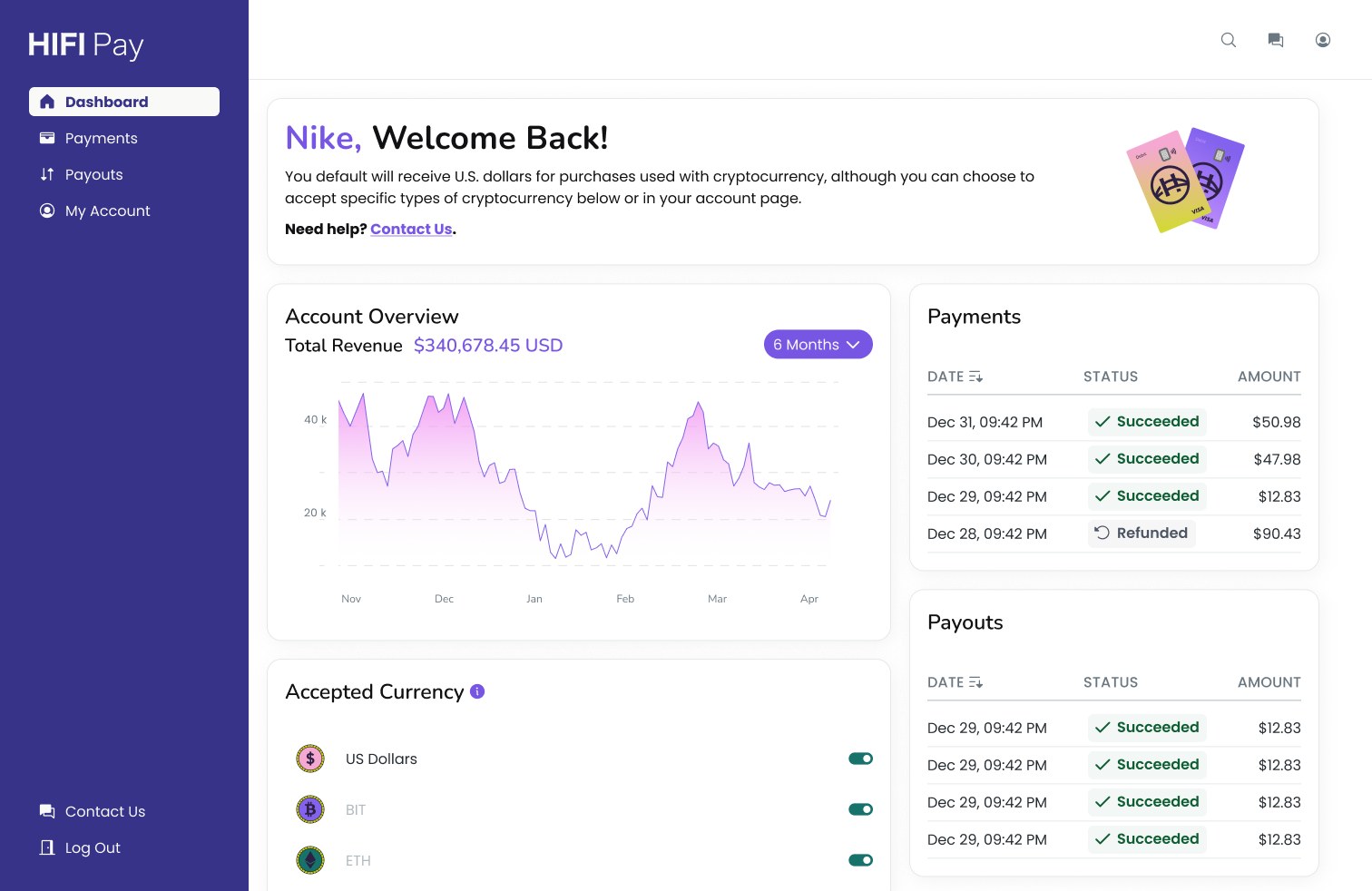
Merchant dashboard — account overview & payments
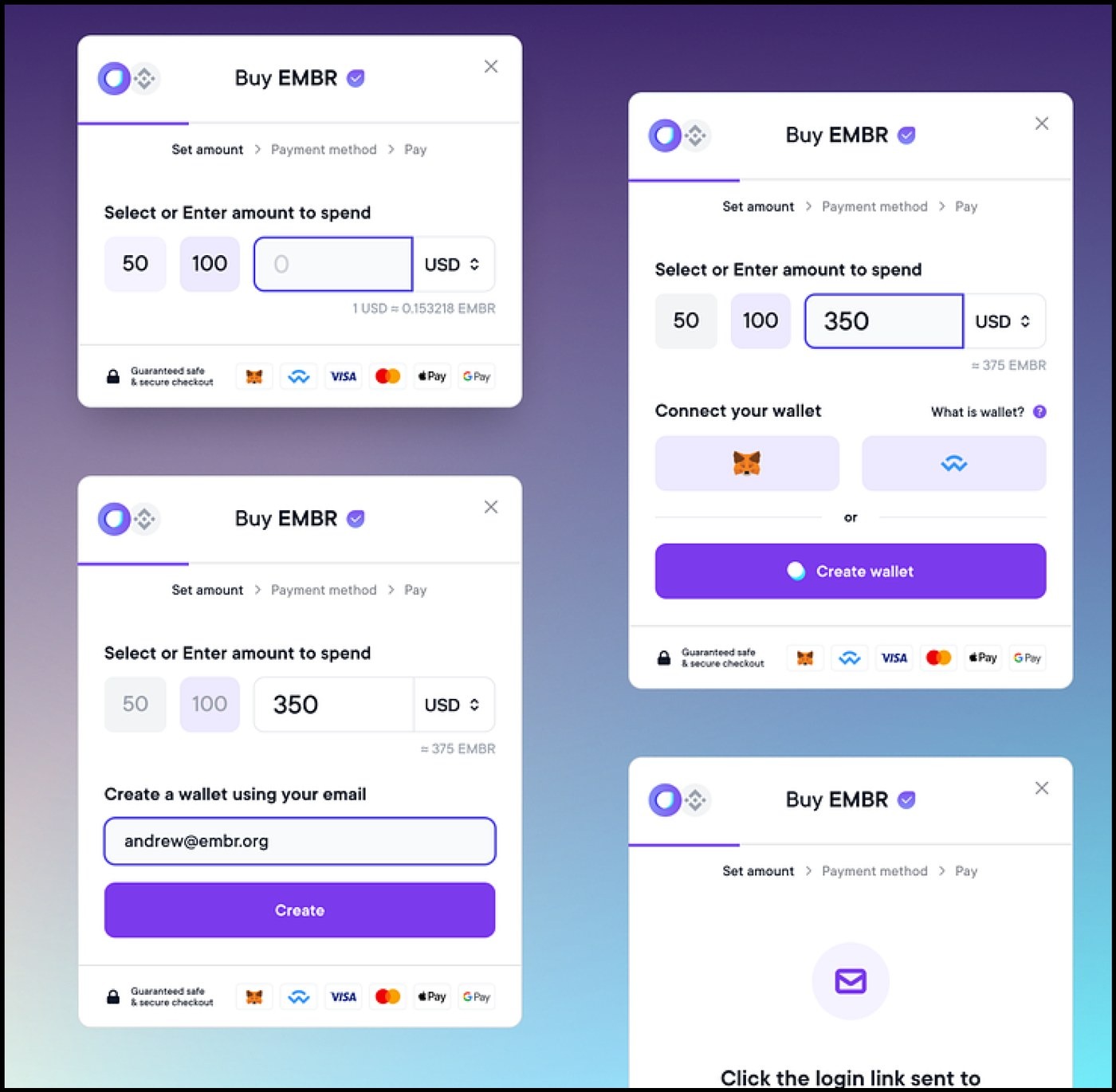
Embeddable pay widget — set amount through checkout
Secure login, built with options
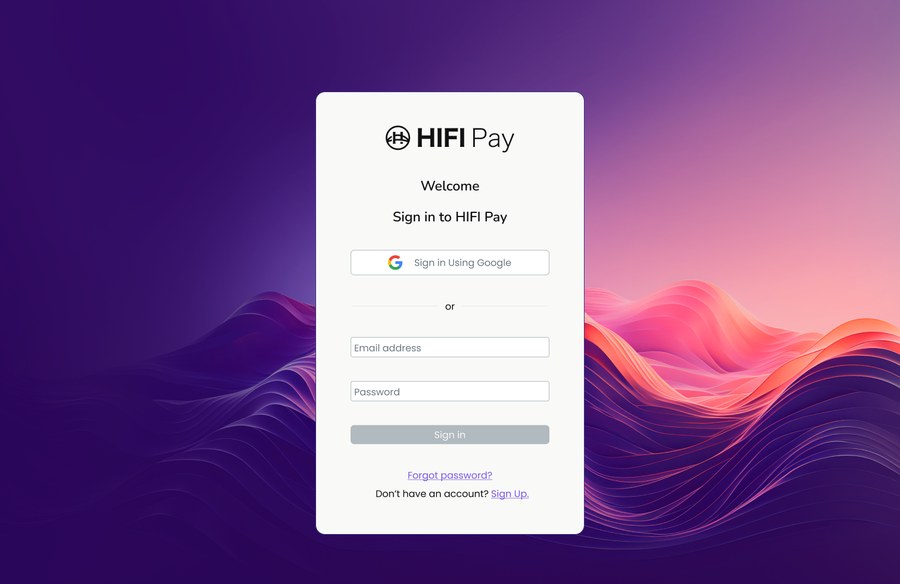
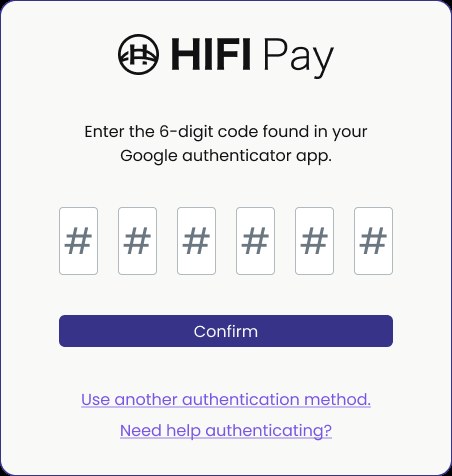
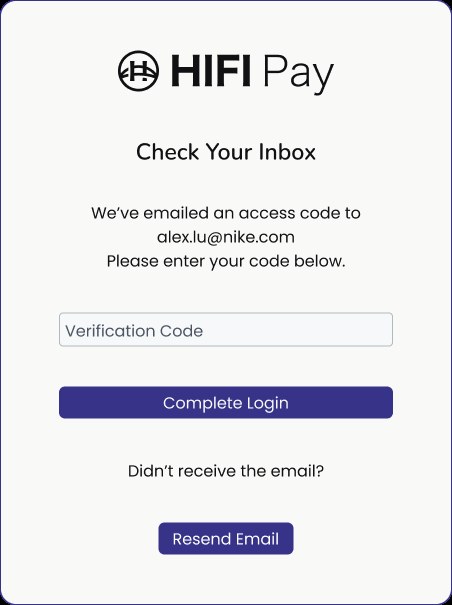
Secure login to the merchant portal was one of stakeholders' top three priorities. The sign-in flow supports Google SSO or email and password, with a second factor — an authenticator app code or an emailed verification link — before anyone reaches the dashboard.
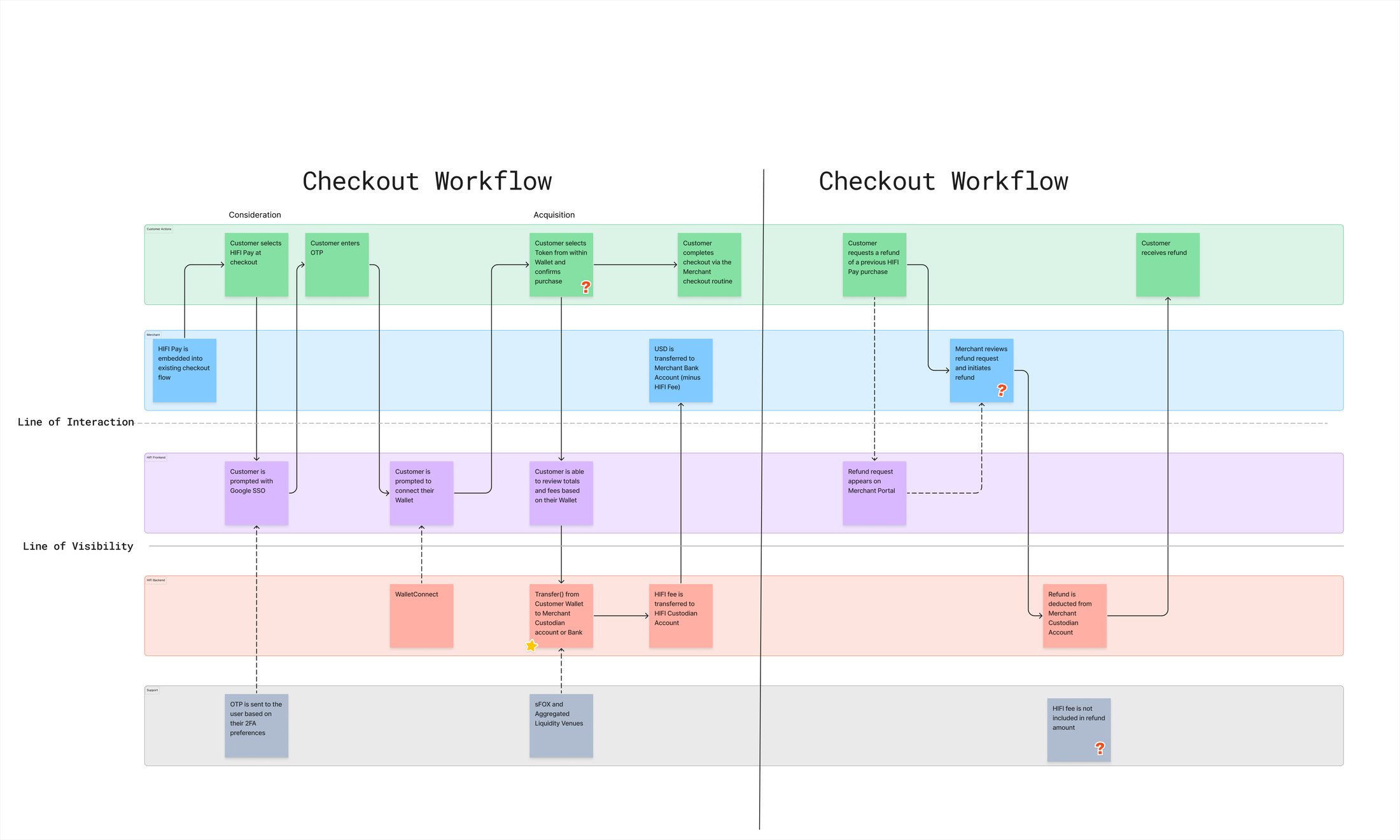
A service blueprint for checkout & refunds
As the project's user-workflow designer, mapping the full checkout and refund journey end to end — across customer actions, the merchant, the HIFI front end, backend, and support — surfaced the open questions (flagged directly on the blueprint) that still needed answers before build.
Explaining UX as more than a buzzword
Working directly with a live client — rather than a simulated brief — meant learning to manage expectations and stay aligned under real business pressure. Stakeholders weren't already bought into user-centered methodology, so part of the job was actively demonstrating its value in real time, not assuming it would be taken on faith.
Where this could go next
Persona-matched usability testing
Recruiting test participants directly from the forums and software that match each proto-persona's profile, then visualizing results with User Journey Maps.
Partnership potential
Project-management software companies are a natural partner for an all-in-one merchant offering built around the widget.